
Homemade ravioli might sound like a big project, but I promise it’s easier than you think. And yes, you can absolutely make it gluten free.
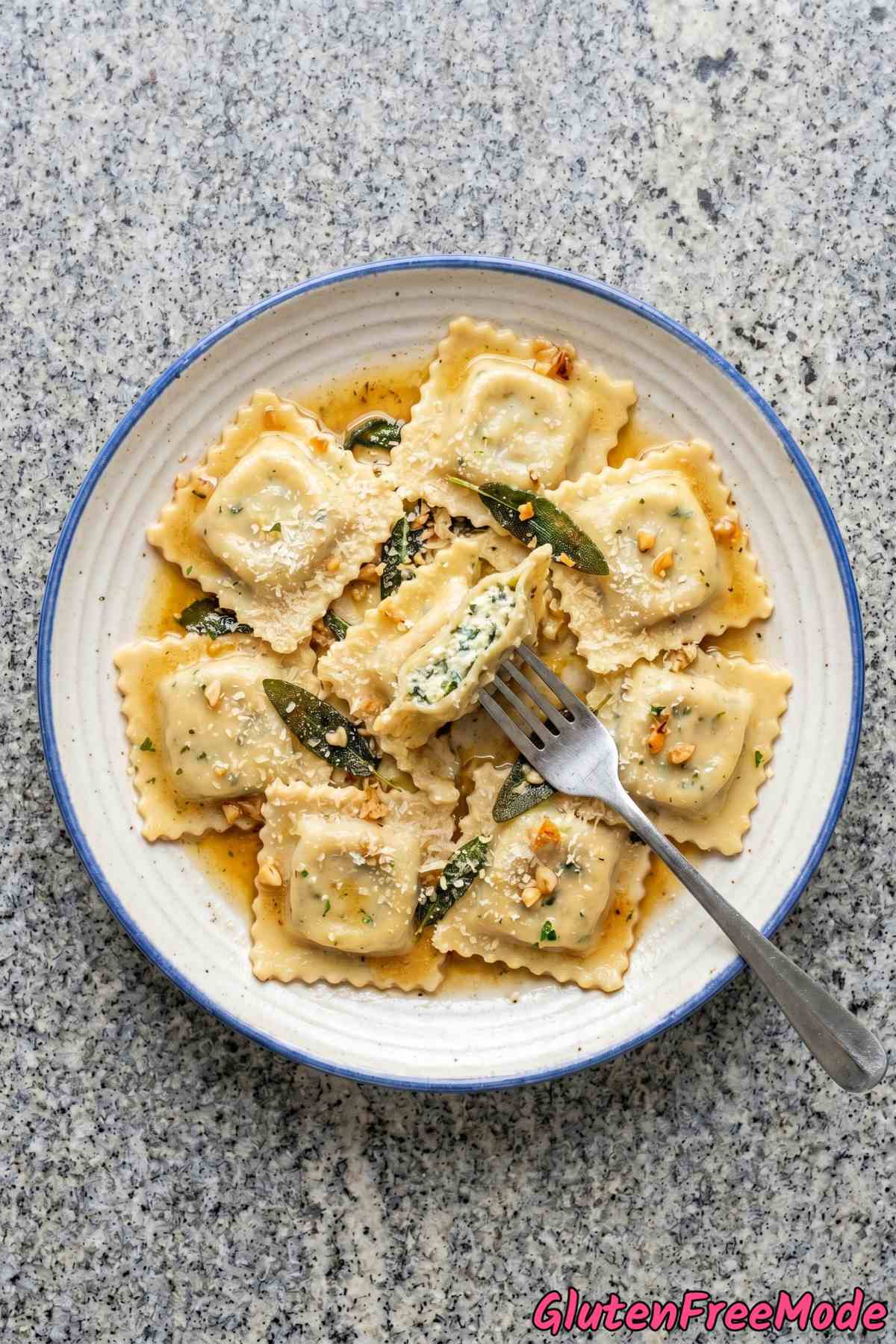
This gluten free cheese ravioli is filled with a simple ricotta and parmesan mixture that’s creamy, savory, and so satisfying. Every bite tastes like the real deal.
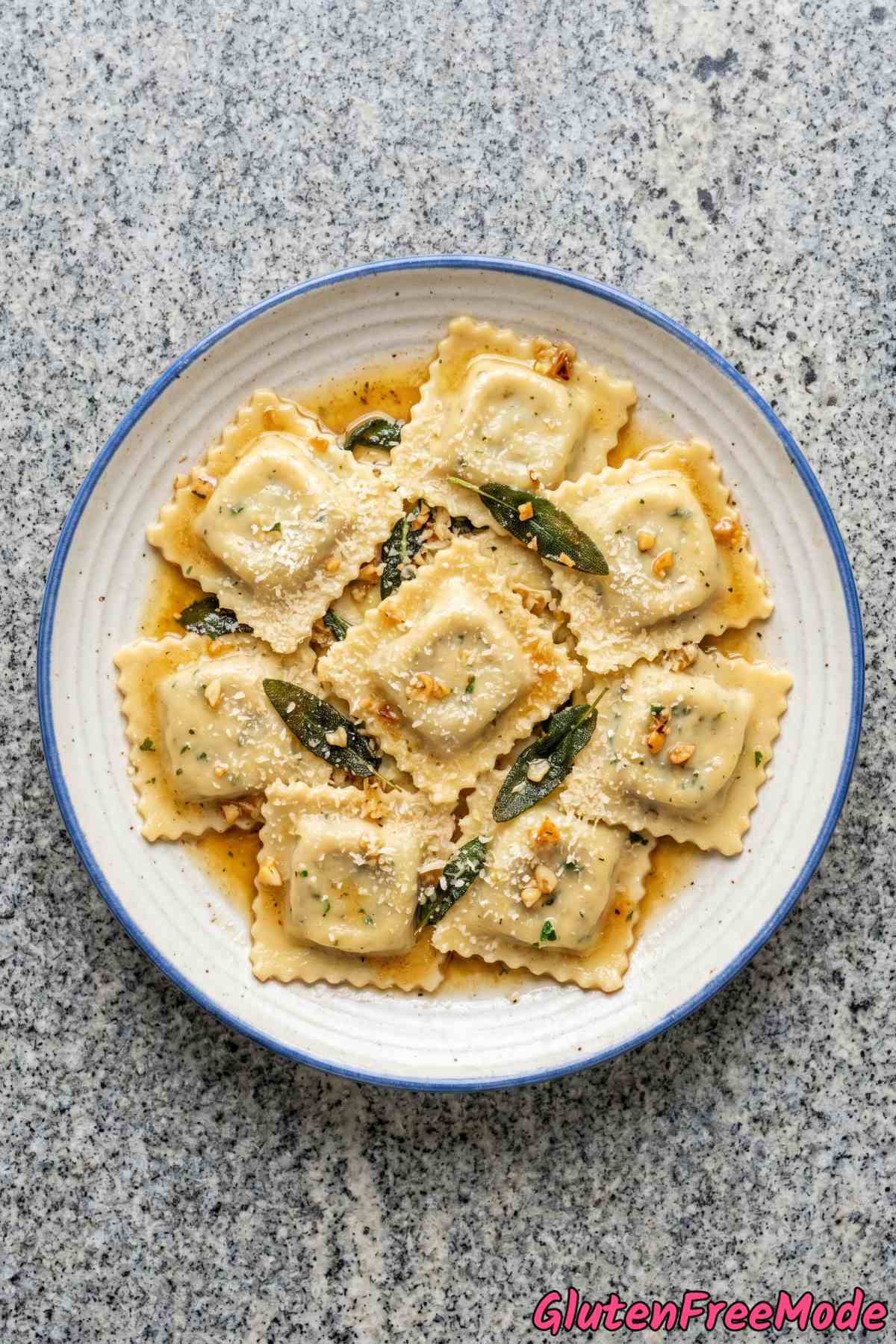
The pasta dough comes together with just a few ingredients and rolls out nicely. It’s soft, pliable, and easy to work with once it’s had a little time to rest.
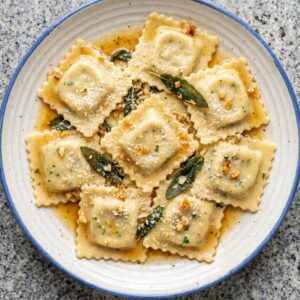
To finish it off, you toss the ravioli in a brown butter sage sauce that takes just a couple of minutes to make. It’s simple but adds so much flavor.
If you’ve been missing good ravioli since going gluten free, this one is for you. Let me walk you through how to make it.
Why You’ll Love This Recipe
Tastes Just Like the Real Thing – This gluten free pasta dough is so tender and silky that no one will ever guess it is gluten free.
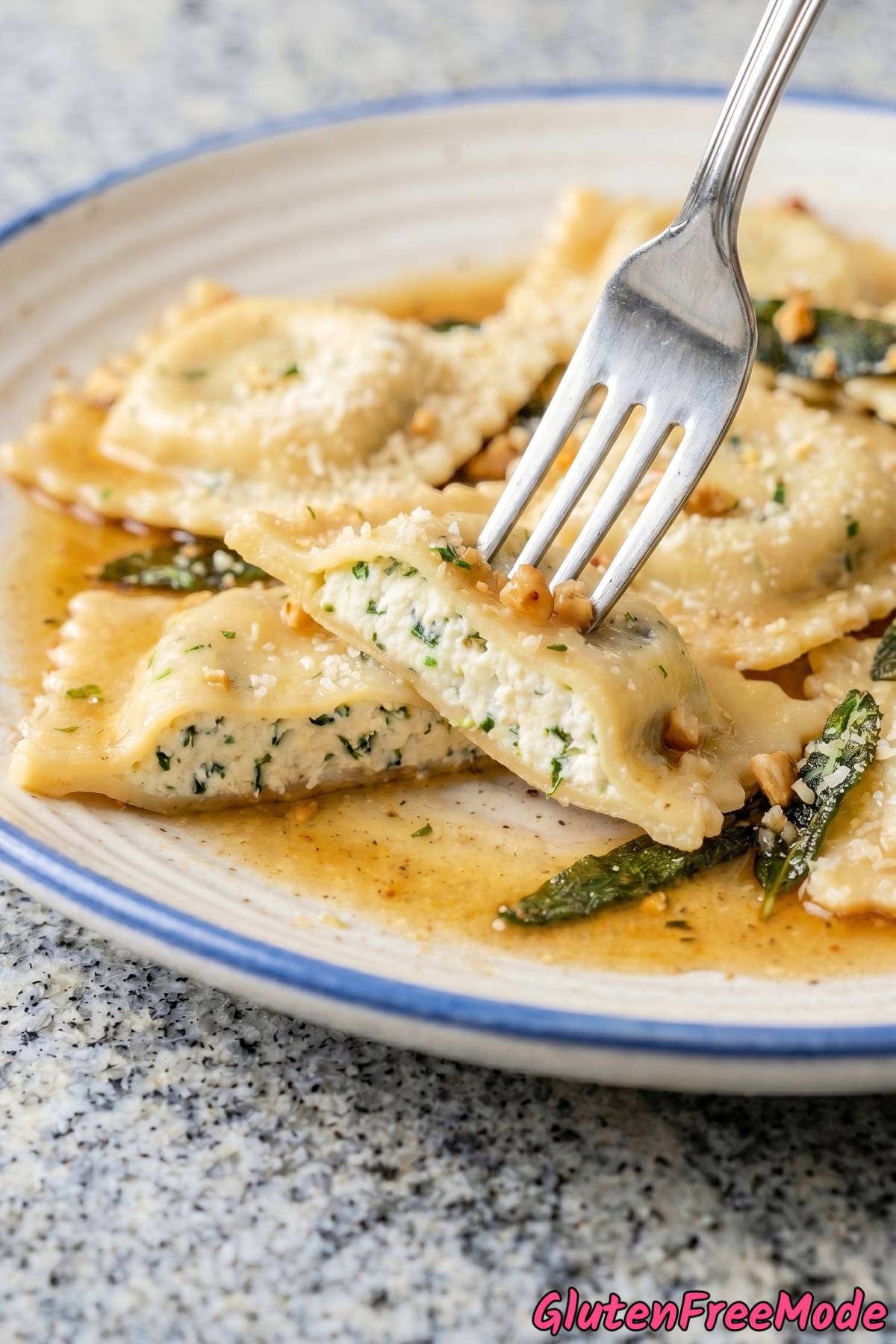
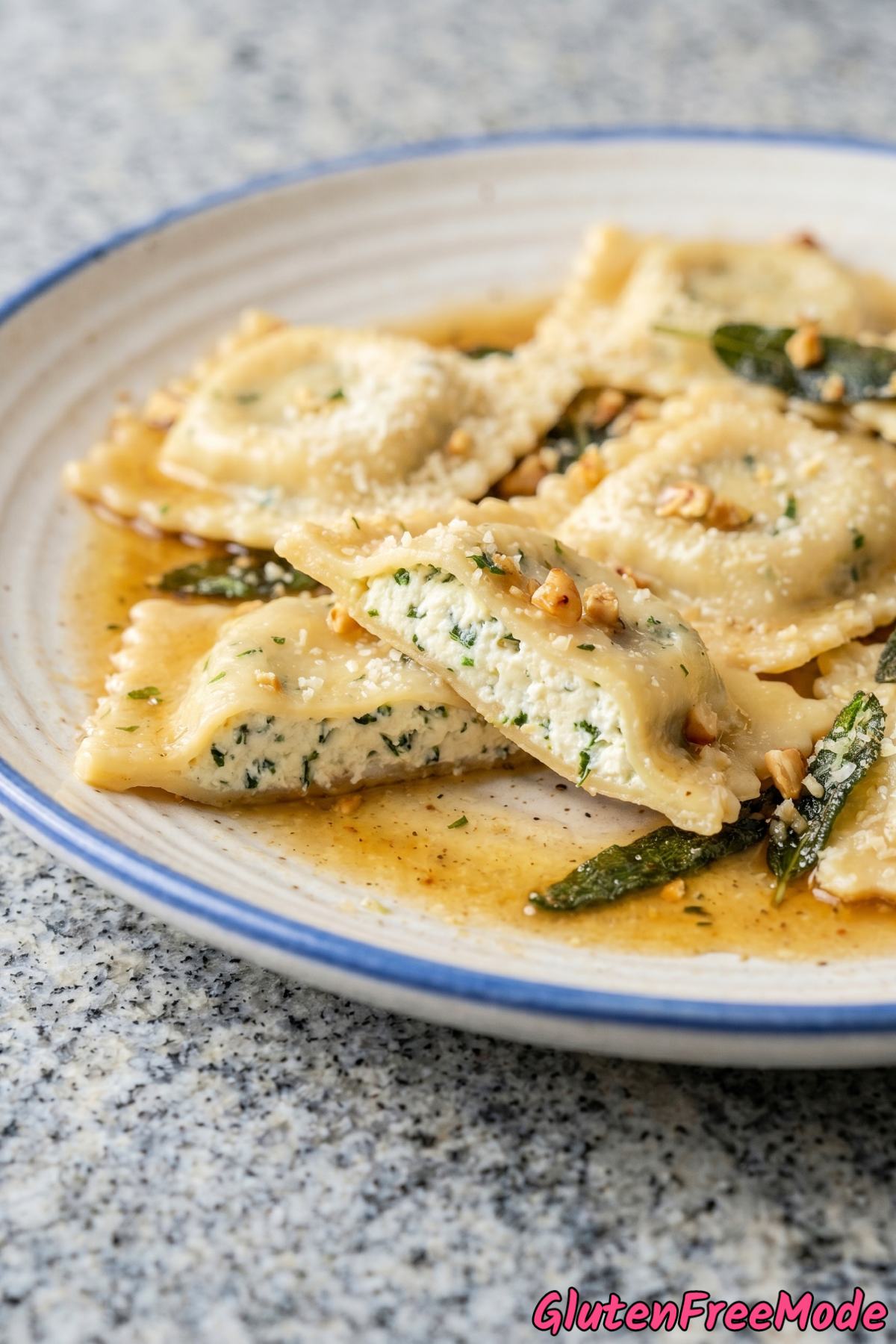
Creamy Dreamy Filling – The ricotta and parmesan filling is rich and smooth with a hint of nutmeg that makes every bite feel special.
That Brown Butter Sage Sauce – Nutty browned butter with crispy sage leaves creates a restaurant-quality sauce using only three simple ingredients.
Ingredients
For the Pasta Dough
- 2 cups Gluten Free 1-to-1 Baking Flour
- 1/2 tsp Xanthan Gum
- 1/2 tsp Salt
- 3 Large Eggs
- 1 tbsp Olive Oil
For the Filling
- 1 1/2 cups Whole Milk Ricotta Cheese
- 1/2 cup Grated Parmesan Cheese
- 1 Large Egg Yolk
- 1 tbsp Fresh Basil, chopped
- 1/4 tsp Nutmeg
- Salt and Black Pepper, to taste
For Serving
- 3 tbsp Unsalted Butter
- 2 Cloves Garlic, minced
- Fresh Sage Leaves, about 10
- Grated Parmesan Cheese, for topping
How to Make
Step 1
Make the pasta dough by whisking together the gluten free flour, xanthan gum, and salt in a large bowl. Create a well in the center and add the eggs and olive oil. Stir with a fork, gradually pulling the flour into the center, until a shaggy dough forms.
Knead the dough on a lightly floured surface for 2 to 3 minutes until smooth and pliable. Wrap it in plastic wrap and let it rest at room temperature for 30 minutes.
Step 2
While the dough rests, prepare the filling. Stir together the ricotta, parmesan, egg yolk, basil, nutmeg, salt, and pepper in a bowl until smooth and well combined. Refrigerate until ready to use.
Step 3
Divide the dough in half. Roll out one piece on a generously floured surface until it is very thin, about 1/16 inch thick. Place tablespoon-sized mounds of filling about 2 inches apart across the sheet of dough.
Step 4
Roll out the second piece of dough to the same thickness and carefully lay it over the filling mounds. Press down firmly around each mound of filling with your fingers to seal the dough and push out any air pockets. Cut into individual ravioli using a pastry wheel or round cutter.
Step 5
Bring a large pot of generously salted water to a gentle boil. Carefully drop the ravioli in batches into the water and cook for 3 to 4 minutes, until they float to the surface and the edges are tender. Lift them out with a slotted spoon and set aside.
Step 6
Melt the butter in a large skillet over medium heat. Add the garlic and sage leaves and cook for 1 to 2 minutes, until the butter begins to brown and the sage crisps slightly. Add the cooked ravioli to the skillet and gently toss them in the brown butter sage sauce.
Step 7
Serve the ravioli topped with extra grated parmesan cheese and a few sage leaves.
My Tips
Don’t Skip the Resting Time
Gluten free pasta dough really needs that full 30 minutes of rest. It gives the xanthan gum time to hydrate and bind everything together, which makes the dough way easier to roll out without cracking.
If you try to roll it right away, it will be crumbly and tear apart on you. If anything, you can let it rest a little longer, but don’t cut it short.
Use Plenty of Flour When Rolling
Gluten free dough is stickier than regular pasta dough, so you need to be generous with the flour on your surface and your rolling pin. Don’t be shy about adding more as you go.
If the dough starts sticking, peel it up, flour underneath, and keep rolling. It’s also a good idea to flip the dough over a few times while rolling so both sides stay dusted.
Getting it thin enough matters a lot here. If the dough is too thick, the ravioli will be chewy and doughy instead of tender. Take your time and roll it as thin as you can without it tearing.
Drain the Ricotta Before Mixing
Ricotta straight from the container usually has a lot of extra moisture in it. If you use it as-is, the filling can get watery and make the dough soggy from the inside, which can cause the ravioli to fall apart while cooking.
Spoon the ricotta into a fine mesh strainer or a few layers of paper towels and let it sit for about 15-20 minutes before mixing. You’ll be surprised how much liquid comes out.
More Tasty Recipes
- Gluten Free Homemade Fresh Pasta
- Gluten Free Stuffed Shells
- Gluten Free Classic Beef Lasagna
- Gluten Free Homemade Potato Gnocchi
FAQ
Can I make the ravioli ahead of time and freeze them?
Yes, you can freeze the uncooked ravioli and they keep really well. Just place them in a single layer on a parchment-lined baking sheet and freeze until solid, then transfer them to a freezer bag or airtight container for up to 2 months.
When you’re ready to cook them, drop them straight into the boiling water without thawing. They’ll just need an extra minute or two of cooking time compared to fresh ones.
Gluten Free Cheese Ravioli
Equipment
- pastry wheel
- Rolling Pin
Ingredients
For the Pasta Dough
- 2 cups Gluten Free 1-to-1 Baking Flour
- 1/2 tsp Xanthan Gum
- 1/2 tsp Salt
- 3 Large Eggs
- 1 tbsp Olive Oil
For the Filling
- 1 1/2 cups Whole Milk Ricotta Cheese
- 1/2 cup Grated Parmesan Cheese
- 1 Large Egg Yolk
- 1 tbsp Fresh Basil, chopped
- 1/4 tsp Nutmeg
- Salt and Black Pepper, to taste
For Serving
- 3 tbsp Unsalted Butter
- 2 Cloves Garlic, minced
- 10 Fresh Sage Leaves
- Grated Parmesan Cheese, for topping
Instructions
- Make the pasta dough by whisking together the gluten free flour, xanthan gum, and salt in a large bowl. Create a well in the center and add the eggs and olive oil. Stir with a fork, gradually pulling the flour into the center, until a shaggy dough forms. Knead the dough on a lightly floured surface for 2 to 3 minutes until smooth and pliable. Wrap it in plastic wrap and let it rest at room temperature for 30 minutes.
- While the dough rests, prepare the filling. Stir together the ricotta, parmesan, egg yolk, basil, nutmeg, salt, and pepper in a bowl until smooth and well combined. Refrigerate until ready to use.
- Divide the dough in half. Roll out one piece on a generously floured surface until it is very thin, about 1/16 inch thick. Place tablespoon-sized mounds of filling about 2 inches apart across the sheet of dough.
- Roll out the second piece of dough to the same thickness and carefully lay it over the filling mounds. Press down firmly around each mound of filling with your fingers to seal the dough and push out any air pockets. Cut into individual ravioli using a pastry wheel or round cutter.
- Bring a large pot of generously salted water to a gentle boil. Carefully drop the ravioli in batches into the water and cook for 3 to 4 minutes, until they float to the surface and the edges are tender. Lift them out with a slotted spoon and set aside.
- Melt the butter in a large skillet over medium heat. Add the garlic and sage leaves and cook for 1 to 2 minutes, until the butter begins to brown and the sage crisps slightly. Add the cooked ravioli to the skillet and gently toss them in the brown butter sage sauce.
- Serve the ravioli topped with extra grated parmesan cheese and a few sage leaves.