
A good baguette can turn a regular meal into something that feels a little more special. Soup and bread, cheese and bread, or honestly just bread and butter. Sometimes that’s all you need.
Finding a gluten free version that actually has the right texture and flavor is not easy though. I’ve tried plenty of recipes over the years, and most of them fell short in one way or another.
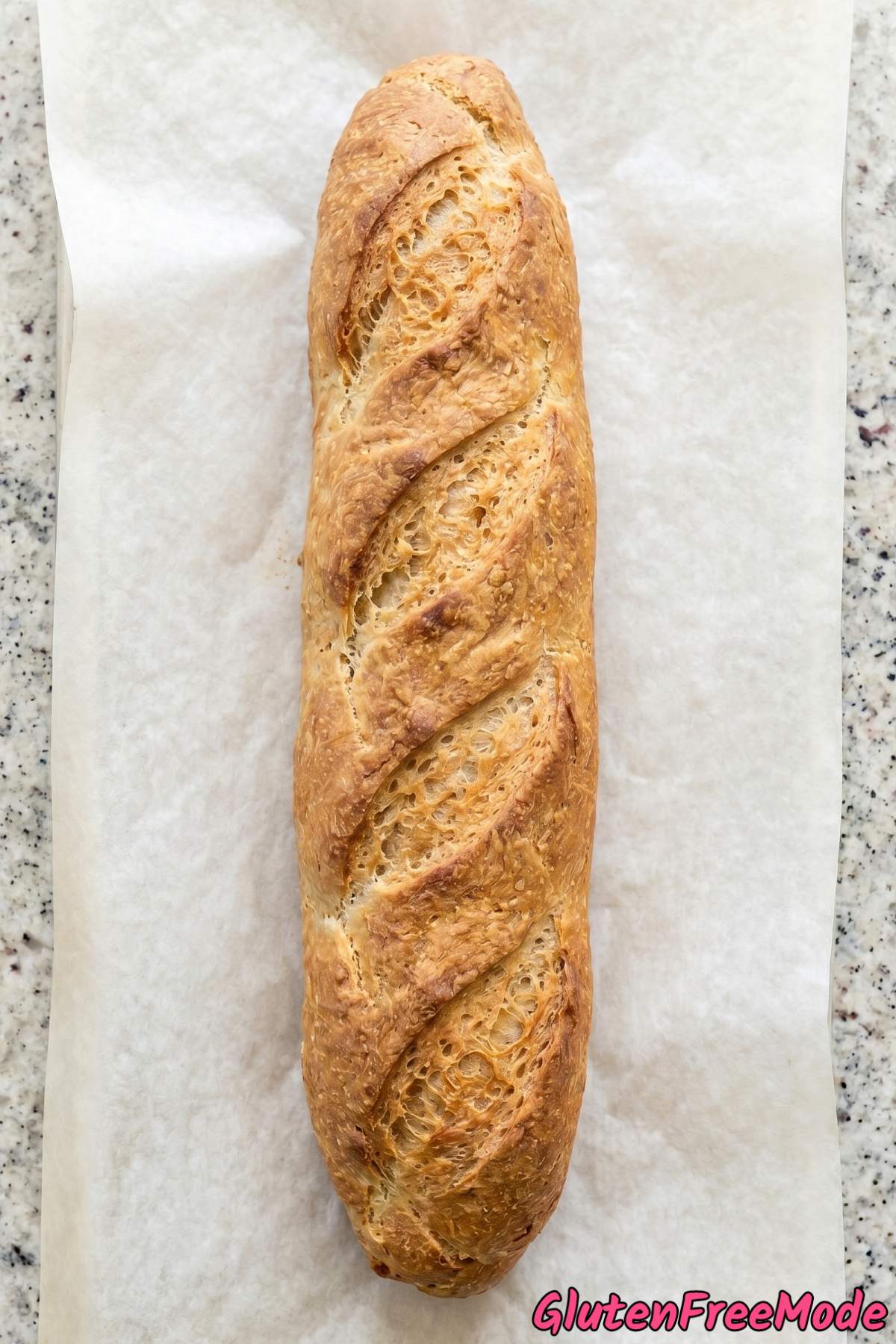
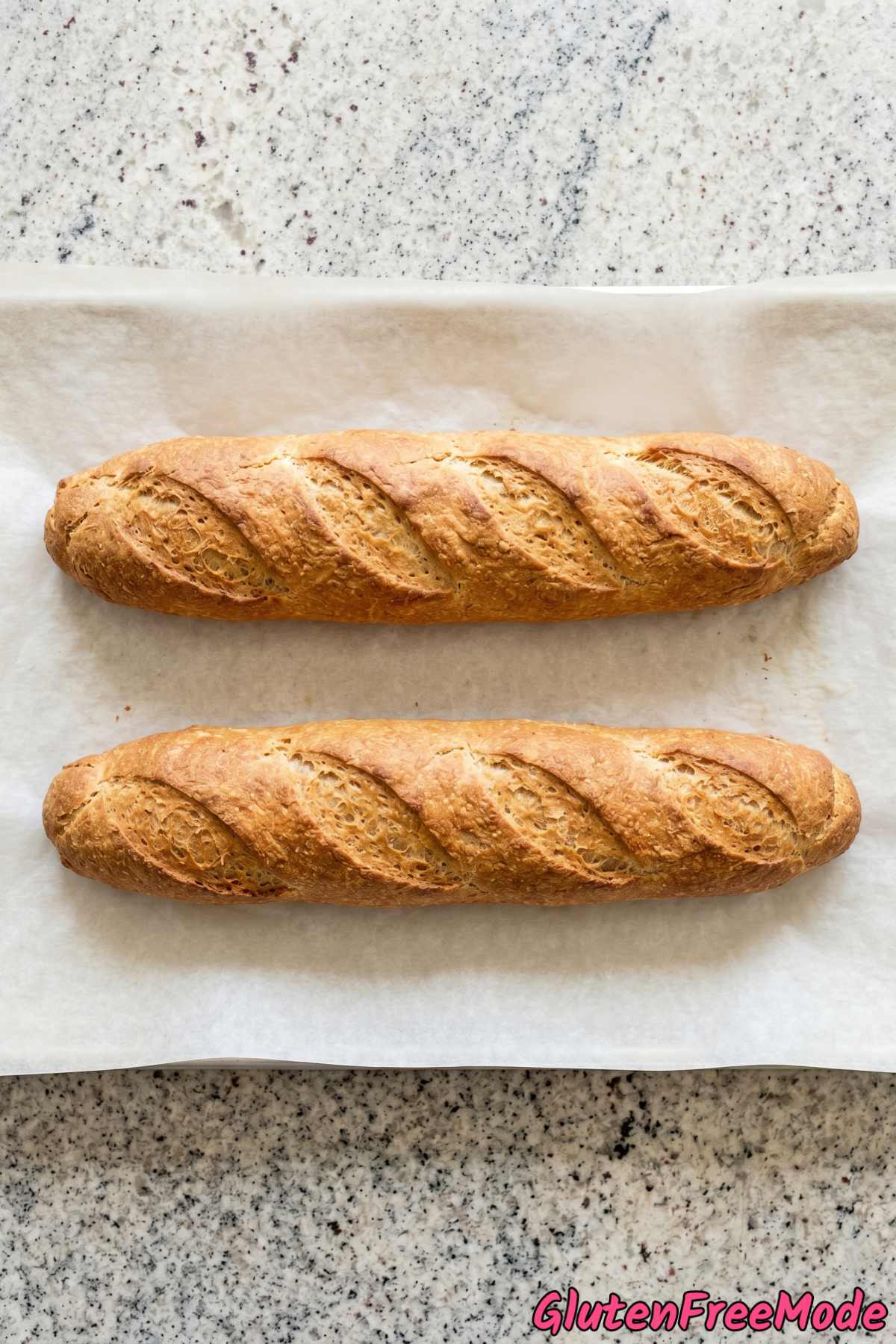
This gluten free french baguette is the one I keep coming back to. It has a crisp, golden crust on the outside and a soft, airy crumb on the inside. It’s the real deal.
The process is straightforward and doesn’t require any fancy tools. You’ll mix up a simple dough, shape it by hand, let it rise, and bake. That’s pretty much it.
If you eat gluten free and miss having fresh bread at home, give this recipe a try. I think you’ll be surprised at how good it is.
Why You’ll Love This Recipe
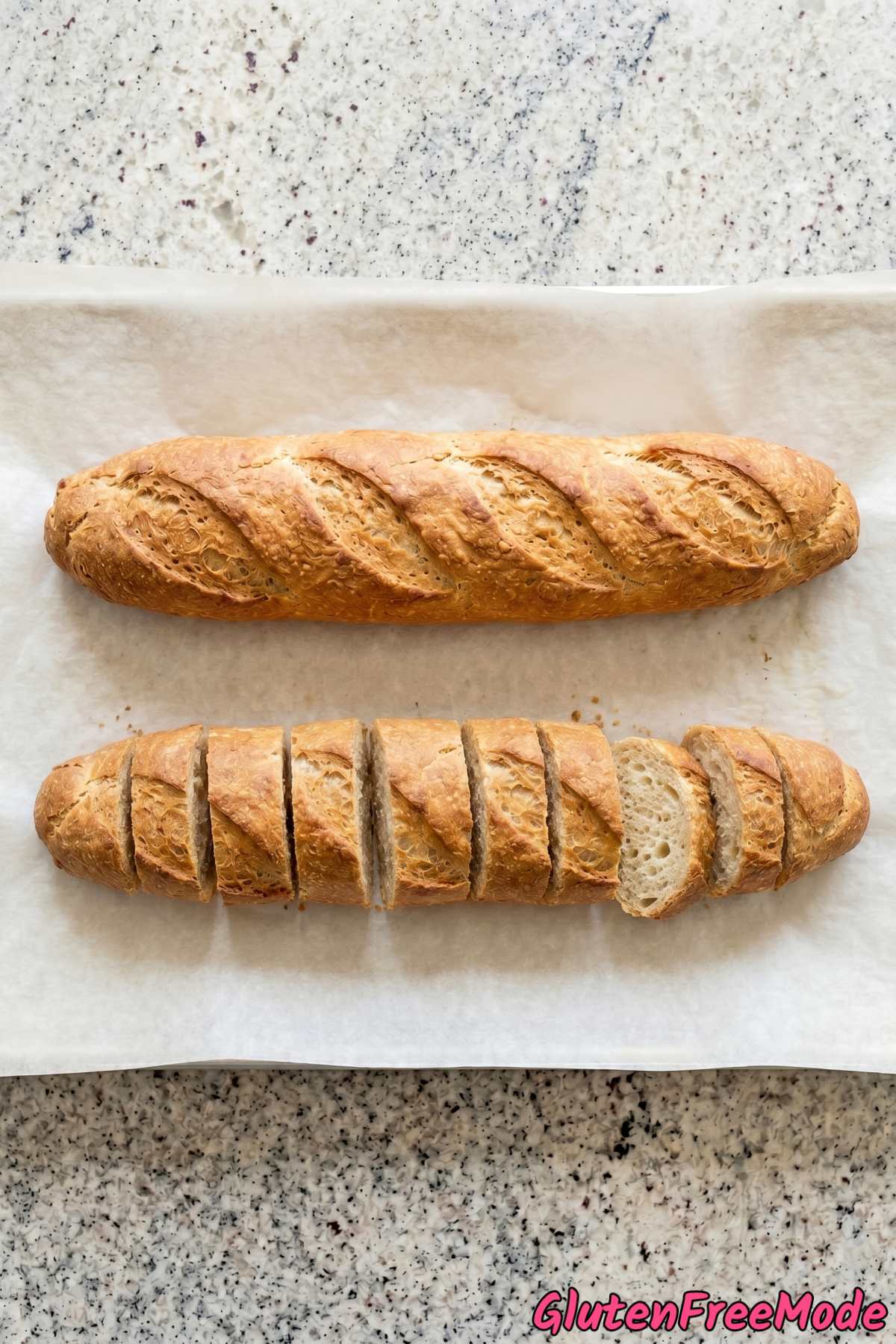
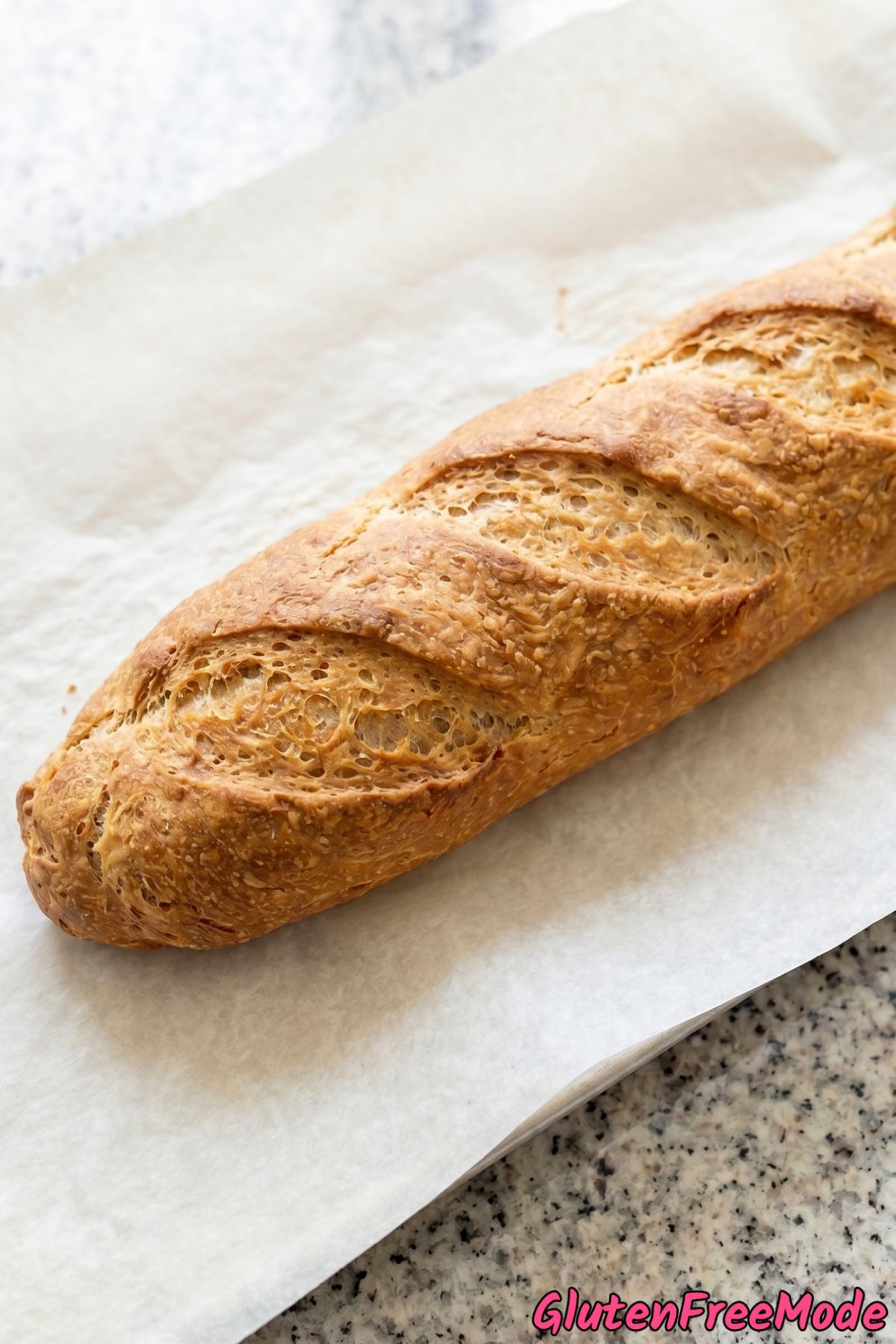
Crispy Crust Just Like Real Bread – The steam trick gives these baguettes a golden crackling crust that rivals any traditional French bakery loaf.
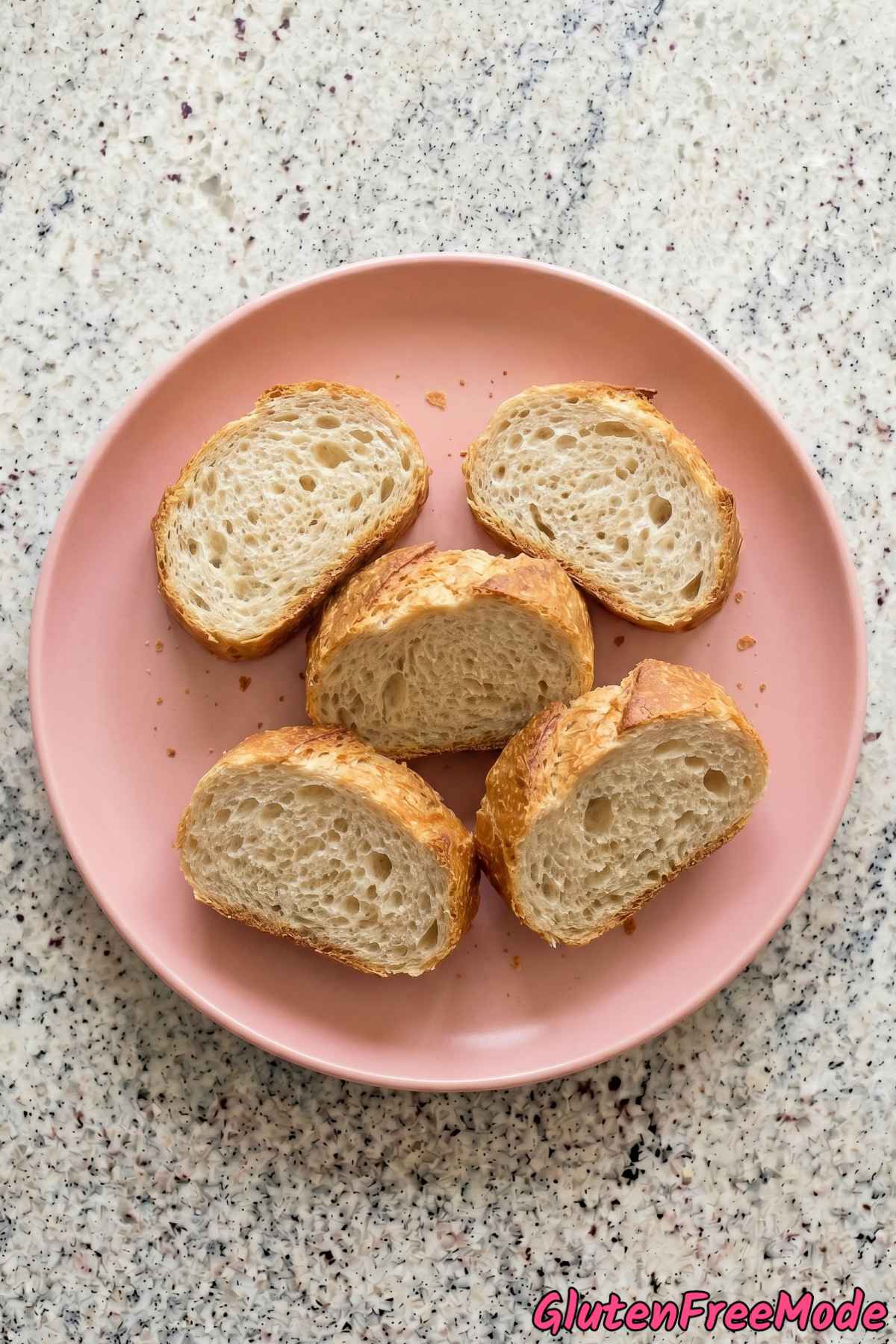
Soft and Airy Inside – Thanks to the tapioca starch and psyllium husk the interior stays light and pillowy instead of dense and gummy.
Perfect for Sandwiches and Bruschetta – This baguette holds up beautifully when sliced and loaded with your favorite toppings or fillings.
Ingredients
- 2 cups Gluten Free 1-to-1 Baking Flour
- 1/2 cup Tapioca Starch
- 2 tsp Psyllium Husk Powder
- 1 tsp Salt
- 1 packet (2 1/4 tsp) Active Dry Yeast
- 2 tsp Granulated Sugar
- 1 cup Warm Water (110 F)
- 2 Large Egg Whites (room temperature)
- 2 tbsp Olive Oil
- 1 tbsp Apple Cider Vinegar
How to Make
Step 1
In a small bowl, combine the warm water, sugar, and yeast. Stir gently and let it sit for 8 to 10 minutes until foamy.
Step 2
In a large bowl, whisk together the gluten free flour, tapioca starch, psyllium husk powder, and salt.
Step 3
Add the egg whites, olive oil, and apple cider vinegar to the yeast mixture and whisk until combined. Pour into the dry ingredients and stir vigorously for 2 to 3 minutes until a smooth, sticky dough forms.
Step 4
Line a baking sheet with parchment paper and lightly dust with gluten free flour. Divide the dough in half. With well-oiled hands, shape each piece into a long log about 12 to 14 inches long and place them on the prepared sheet, spaced a few inches apart.
Smooth the surface with damp fingers. Cover loosely with greased plastic wrap and let rise in a warm spot for 40 to 50 minutes, until noticeably puffed.
Step 5
Preheat the oven to 425 F and place an oven-safe dish on the bottom rack. Score the tops of the baguettes with 3 to 4 shallow diagonal slashes. Pour half a cup of hot water into the dish on the bottom rack to create steam, and immediately place the baguettes in the oven.
Step 6
Bake for 22 to 28 minutes, until the crust is golden brown and crisp and the internal temperature reaches 205 F.
Step 7
Let the baguettes cool on a wire rack for at least 20 minutes before slicing. The crust will be beautifully crisp, and the interior soft and airy.
My Tips
Make Sure Your Yeast Is Actually Active
After you mix the yeast with warm water and sugar, it needs to get foamy and bubbly within 8 to 10 minutes. If nothing happens and it just sits there flat, your yeast is dead and the dough won’t rise at all.
The water temperature matters a lot here. Use a thermometer if you have one and aim for 110 F. Water that’s too hot will kill the yeast, and water that’s too cool won’t wake it up.
If your yeast doesn’t foam up, toss it and start over with a fresh packet. It’s better to waste a little yeast now than to waste all your ingredients on flat baguettes.
Stir the Dough Hard and Long Enough
With gluten free dough, there’s no gluten network to develop, so the psyllium husk and tapioca starch are doing all the heavy lifting to give the bread structure. Stirring vigorously for a full 2 to 3 minutes helps these ingredients bind together properly.
Set a timer so you don’t cut it short. The dough should look smooth and sticky by the end, not lumpy or dry. If it looks crumbly, keep going.
A sturdy wooden spoon or a Danish dough whisk works great here. A flimsy spatula will make the job harder than it needs to be.
Oil Your Hands Generously When Shaping
This dough is very sticky and nothing like regular wheat dough. If you try to shape it with dry or lightly floured hands, it will stick to everything and you’ll end up with a mess instead of a baguette.
Coat your hands well with olive oil before you touch the dough, and re-oil them as needed. This makes it so much easier to roll and smooth the logs into shape.
Once they’re shaped, use damp fingers to smooth out any cracks or rough spots on the surface. This helps you get a nicer crust after baking.
More Tasty Recipes
- Gluten Free Rosemary & Sea Salt Focaccia
- Gluten Free Fluffy Dinner Rolls
- Gluten Free Asiago Cheese Bread
- Gluten Free Everyday Sandwich Loaf
- Gluten Free Cheesy Garlic Bread
FAQ
Why is psyllium husk powder needed in this baguette?
Psyllium husk powder acts as a binder and helps mimic the stretchy, chewy texture that gluten normally provides in traditional bread. Without it, the dough would be too crumbly and the baguettes would fall apart easily.
It also helps the dough hold onto moisture during baking, which gives you that soft and airy interior. Make sure you use psyllium husk powder and not whole psyllium husks, since the powder blends in much more smoothly.
Gluten Free French Baguette
Equipment
- wire rack
- oven-safe dish
Ingredients
- 2 cups Gluten Free 1-to-1 Baking Flour
- 1/2 cup Tapioca Starch
- 2 tsp Psyllium Husk Powder
- 1 tsp Salt
- 1 packet (2 1/4 tsp) Active Dry Yeast
- 2 tsp Granulated Sugar
- 1 cup Warm Water (110 F)
- 2 Large Egg Whites (room temperature)
- 2 tbsp Olive Oil
- 1 tbsp Apple Cider Vinegar
Instructions
- In a small bowl, combine the warm water, sugar, and yeast. Stir gently and let it sit for 8 to 10 minutes until foamy.
- In a large bowl, whisk together the gluten free flour, tapioca starch, psyllium husk powder, and salt.
- Add the egg whites, olive oil, and apple cider vinegar to the yeast mixture and whisk until combined. Pour into the dry ingredients and stir vigorously for 2 to 3 minutes until a smooth, sticky dough forms.
- Line a baking sheet with parchment paper and lightly dust with gluten free flour. Divide the dough in half. With well-oiled hands, shape each piece into a long log about 12 to 14 inches long and place them on the prepared sheet, spaced a few inches apart. Smooth the surface with damp fingers. Cover loosely with greased plastic wrap and let rise in a warm spot for 40 to 50 minutes, until noticeably puffed.
- Preheat the oven to 425 F and place an oven-safe dish on the bottom rack. Score the tops of the baguettes with 3 to 4 shallow diagonal slashes. Pour half a cup of hot water into the dish on the bottom rack to create steam, and immediately place the baguettes in the oven.
- Bake for 22 to 28 minutes, until the crust is golden brown and crisp and the internal temperature reaches 205 F.
- Let the baguettes cool on a wire rack for at least 20 minutes before slicing. The crust will be beautifully crisp, and the interior soft and airy.