
Good gluten free bread can be hard to find, and it’s even harder to make at home. A lot of recipes end up too crumbly, too gummy, or just bland. This one is different.
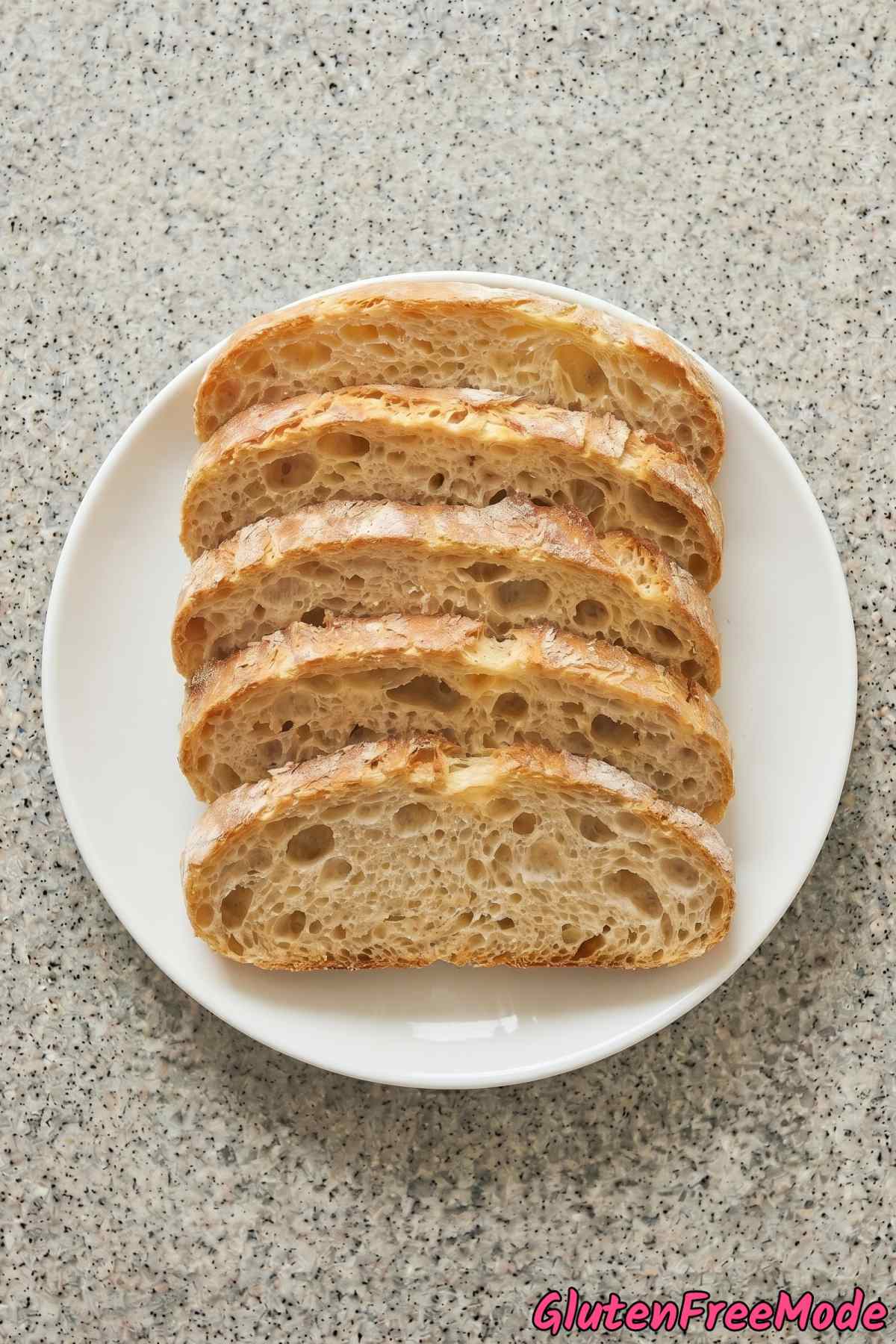
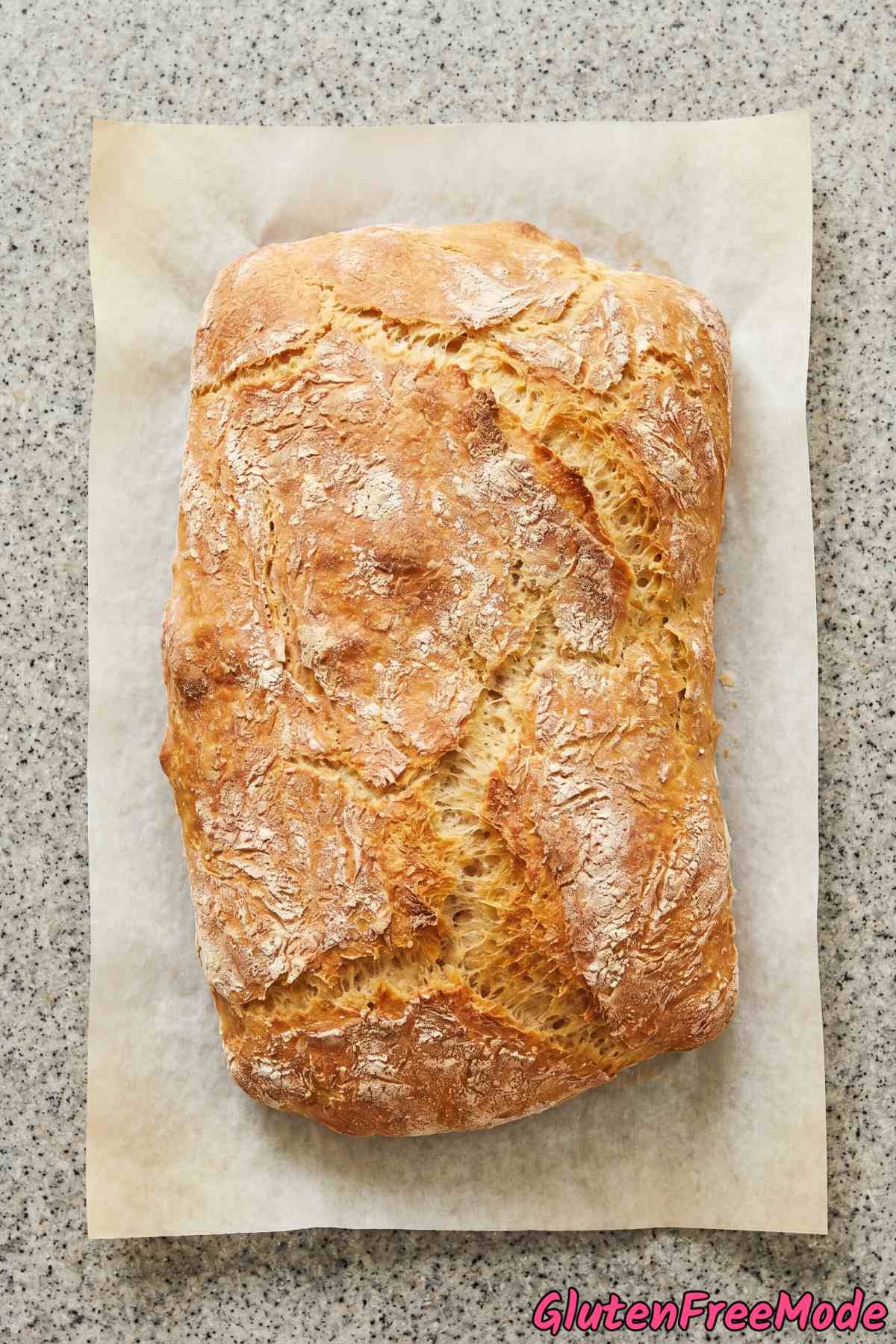
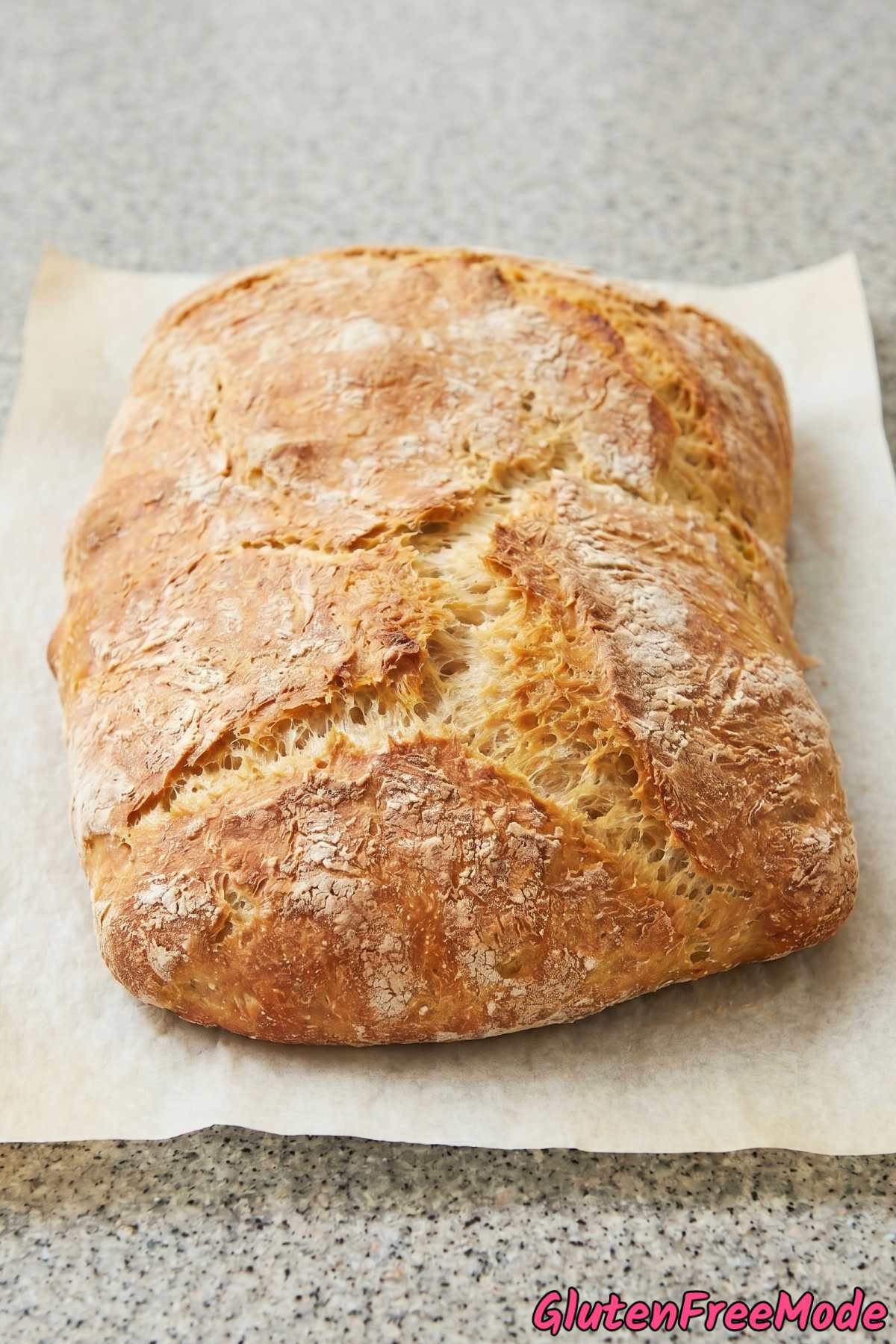
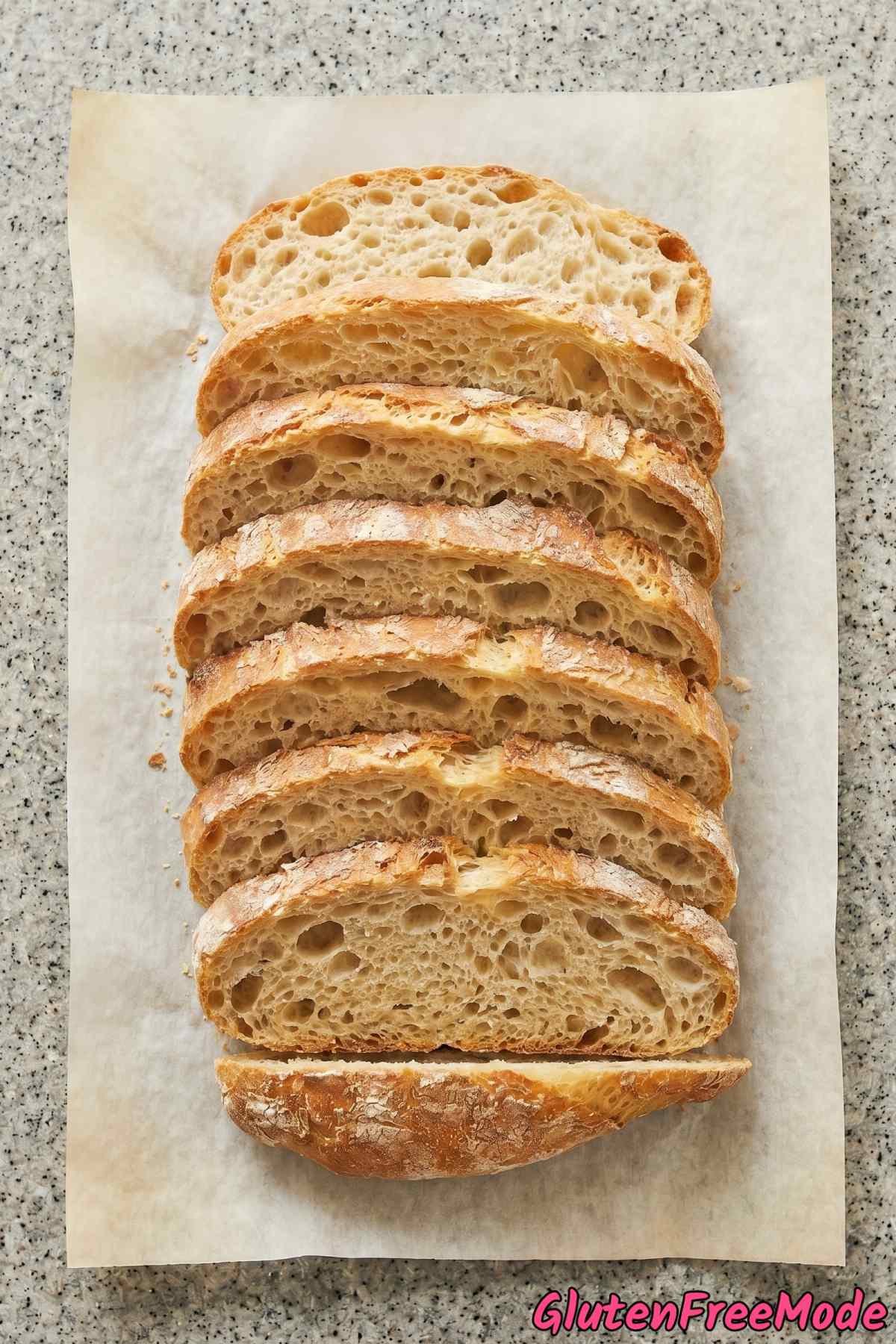
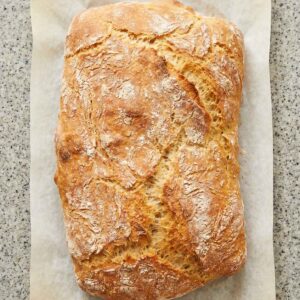
This gluten free ciabatta bread has a real crust that cracks when you break it open, and the inside is soft and full of those signature air pockets that ciabatta is known for.
The ingredient list is simple and straightforward. No weird or hard-to-find items. If you’ve baked gluten free before, you probably already have most of what you need in your pantry.
One thing to keep in mind is that the dough will look very wet and sticky. That’s completely normal and actually important for the final texture, so don’t be tempted to add more flour.
I’ll take you through every step below so you can get perfect results on your first try.
Why You’ll Love This Recipe
Crispy Crust With a Soft Inside – This bread bakes up with a golden crackling crust and a pillowy soft center just like real ciabatta.
Open and Airy Crumb – The wet dough and steam method create those beautiful big air pockets that ciabatta is famous for.
No Kneading Required – You just stir the dough together in a bowl so there is no stand mixer or hand kneading needed at all.
Tastes Like Real Bakery Bread – The olive oil and crisp crust give this loaf a rich flavor that most gluten free breads just cannot match.
Ingredients
- 2 cups Gluten Free 1-to-1 Baking Flour
- 1/2 cup Tapioca Starch
- 2 tsp Psyllium Husk Powder
- 1 1/4 tsp Salt
- 1 packet (2 1/4 tsp) Active Dry Yeast
- 1 tsp Granulated Sugar
- 1 1/4 cups Warm Water (110 F)
- 2 Large Egg Whites (room temperature)
- 3 tbsp Olive Oil
- 1 tsp Apple Cider Vinegar
How to Make
Step 1
In a small bowl, combine the warm water, sugar, and yeast. Stir gently and let sit for 8 to 10 minutes until bubbly and foamy.
Step 2
In a large bowl, whisk together the gluten free flour, tapioca starch, psyllium husk powder, and salt.
Step 3
Add the egg whites, olive oil, and apple cider vinegar to the yeast mixture. Whisk to combine, then pour into the dry ingredients. Stir vigorously for about 3 minutes until a very wet, sticky batter-like dough forms. This dough is meant to be very loose and wet, which is what creates ciabatta’s signature open crumb.
Step 4
Cover the bowl tightly with plastic wrap and let the dough rise in a warm spot for about 60 to 75 minutes, until it has roughly doubled in size and looks bubbly throughout.
Step 5
Line a baking sheet with parchment paper and generously dust it with gluten free flour. Gently scrape the dough onto the prepared sheet without deflating it too much. Using well-floured hands, gently shape it into a rough rectangle about 10 by 6 inches. The shape should be rustic and imperfect.
Dust the top lightly with gluten free flour. Let it rest uncovered for 20 minutes while you preheat the oven.
Step 6
Preheat the oven to 425 F. Place an oven-safe dish on the bottom rack. Pour half a cup of hot water into the dish right before placing the bread in the oven to create steam.
Step 7
Bake for 24 to 30 minutes, until the crust is golden and crisp and the loaf sounds hollow when tapped on the bottom. Let it cool on a wire rack for at least 20 minutes before slicing.
My Tips
The Dough Should Look Like Thick Batter
If your dough looks like something you could shape into a ball with your hands, it’s too dry. Gluten free ciabatta dough is supposed to be very wet and sticky, almost like a thick pancake batter. That wetness is what gives ciabatta its airy, open crumb inside.
If your dough seems too thick or dry after mixing, add warm water one tablespoon at a time until it loosens up. Different gluten free flour blends absorb water differently, so yours might need a small adjustment.
Don’t be tempted to add more flour to make it easier to handle. You’ll end up with a dense, heavy loaf instead of the light and airy bread you’re going for.
Make Sure Your Yeast Is Actually Active
After you mix the yeast with warm water and sugar, it should be noticeably foamy and bubbly within 10 minutes. If nothing happens and the surface still looks flat, your yeast is dead and you need to start over with a fresh packet.
The water temperature matters a lot here. Use a kitchen thermometer if you have one and aim for 110 F. Water that’s too hot will kill the yeast, and water that’s too cool won’t wake it up properly.
Don’t Skip the Psyllium Husk Powder
In regular bread, gluten is what holds everything together and traps the air bubbles from the yeast. Since there’s no gluten in this recipe, psyllium husk powder does that job instead. It absorbs water and creates a gel-like structure that gives the bread its chew and holds the shape together.
Make sure you’re using psyllium husk powder and not whole psyllium husks. The whole husks are much coarser and won’t blend into the dough the same way. If you only have whole husks, grind them into a fine powder in a blender or spice grinder before using them.
More Tasty Recipes
- Gluten Free Rosemary & Sea Salt Focaccia
- Gluten Free Asiago Cheese Bread
- Gluten Free Everyday Sandwich Loaf
- Gluten Free Fluffy Dinner Rolls
- Gluten Free Cheesy Garlic Bread
FAQ
Why is the dough so wet and sticky – is that normal?
Yes, totally normal! Gluten free ciabatta dough is supposed to look more like a thick batter than a traditional bread dough. Since there’s no gluten to provide structure, the extra moisture is what helps create those big, airy holes inside the bread that ciabatta is known for.
Don’t be tempted to add more flour to make it easier to handle. Instead, just use well-floured hands when shaping and trust the process.
Gluten Free Ciabatta Bread
Equipment
- wire rack
Ingredients
- 2 cups Gluten Free 1-to-1 Baking Flour
- 1/2 cup Tapioca Starch
- 2 tsp Psyllium Husk Powder
- 1 1/4 tsp Salt
- 2 1/4 tsp Active Dry Yeast
- 1 tsp Granulated Sugar
- 1 1/4 cups Warm Water (110 F)
- 2 Large Egg Whites (room temperature)
- 3 tbsp Olive Oil
- 1 tsp Apple Cider Vinegar
Instructions
- In a small bowl, combine the warm water, sugar, and yeast. Stir gently and let sit for 8 to 10 minutes until bubbly and foamy.
- In a large bowl, whisk together the gluten free flour, tapioca starch, psyllium husk powder, and salt.
- Add the egg whites, olive oil, and apple cider vinegar to the yeast mixture. Whisk to combine, then pour into the dry ingredients. Stir vigorously for about 3 minutes until a very wet, sticky batter-like dough forms. This dough is meant to be very loose and wet, which is what creates ciabatta's signature open crumb.
- Cover the bowl tightly with plastic wrap and let the dough rise in a warm spot for about 60 to 75 minutes, until it has roughly doubled in size and looks bubbly throughout.
- Line a baking sheet with parchment paper and generously dust it with gluten free flour. Gently scrape the dough onto the prepared sheet without deflating it too much. Using well-floured hands, gently shape it into a rough rectangle about 10 by 6 inches. The shape should be rustic and imperfect. Dust the top lightly with gluten free flour. Let it rest uncovered for 20 minutes while you preheat the oven.
- Preheat the oven to 425 F. Place an oven-safe dish on the bottom rack. Pour half a cup of hot water into the dish right before placing the bread in the oven to create steam.
- Bake for 24 to 30 minutes, until the crust is golden and crisp and the loaf sounds hollow when tapped on the bottom. Let it cool on a wire rack for at least 20 minutes before slicing.