
Making fresh pasta from scratch is one of those things that feels really special. And yes, you can absolutely do it gluten free.
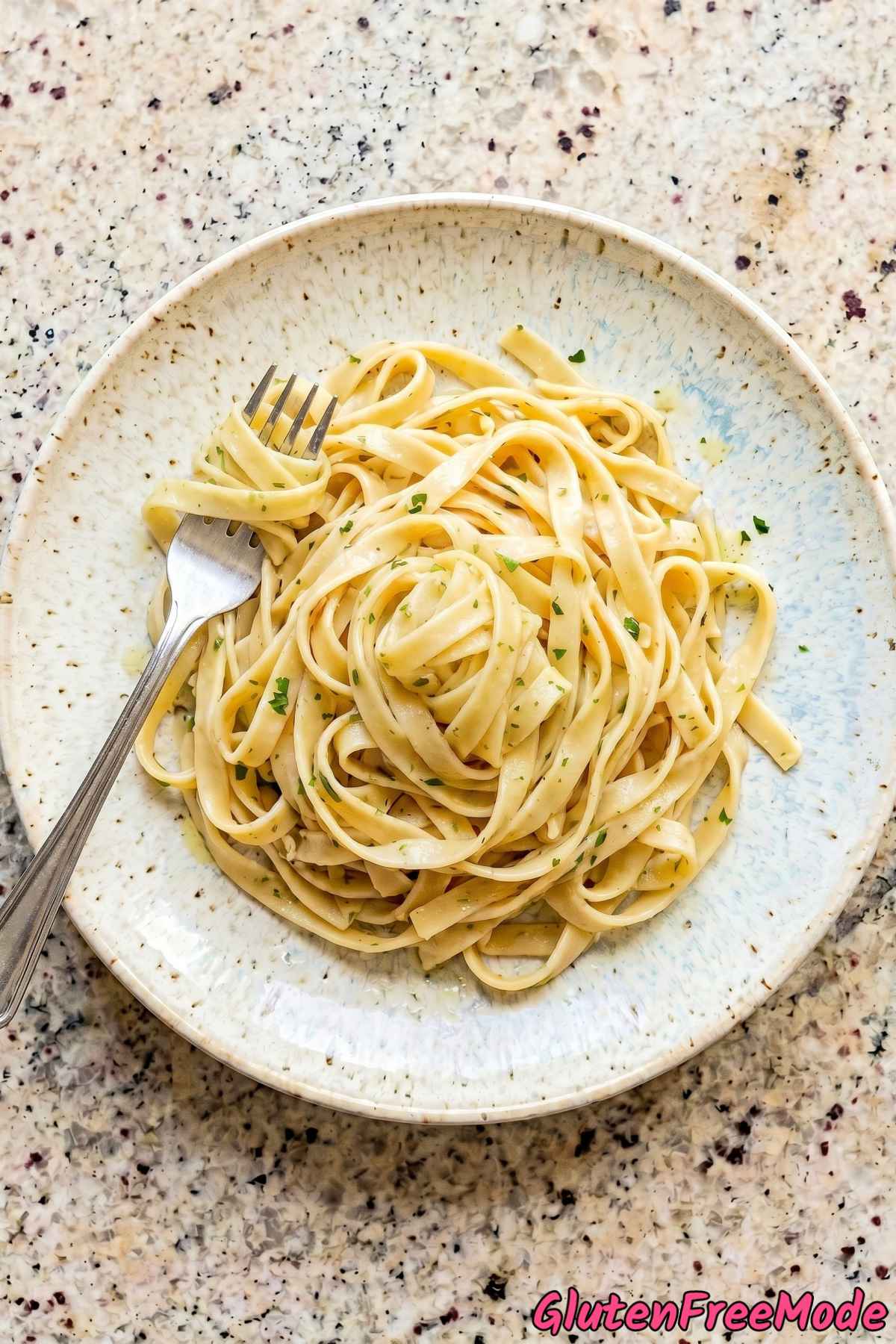
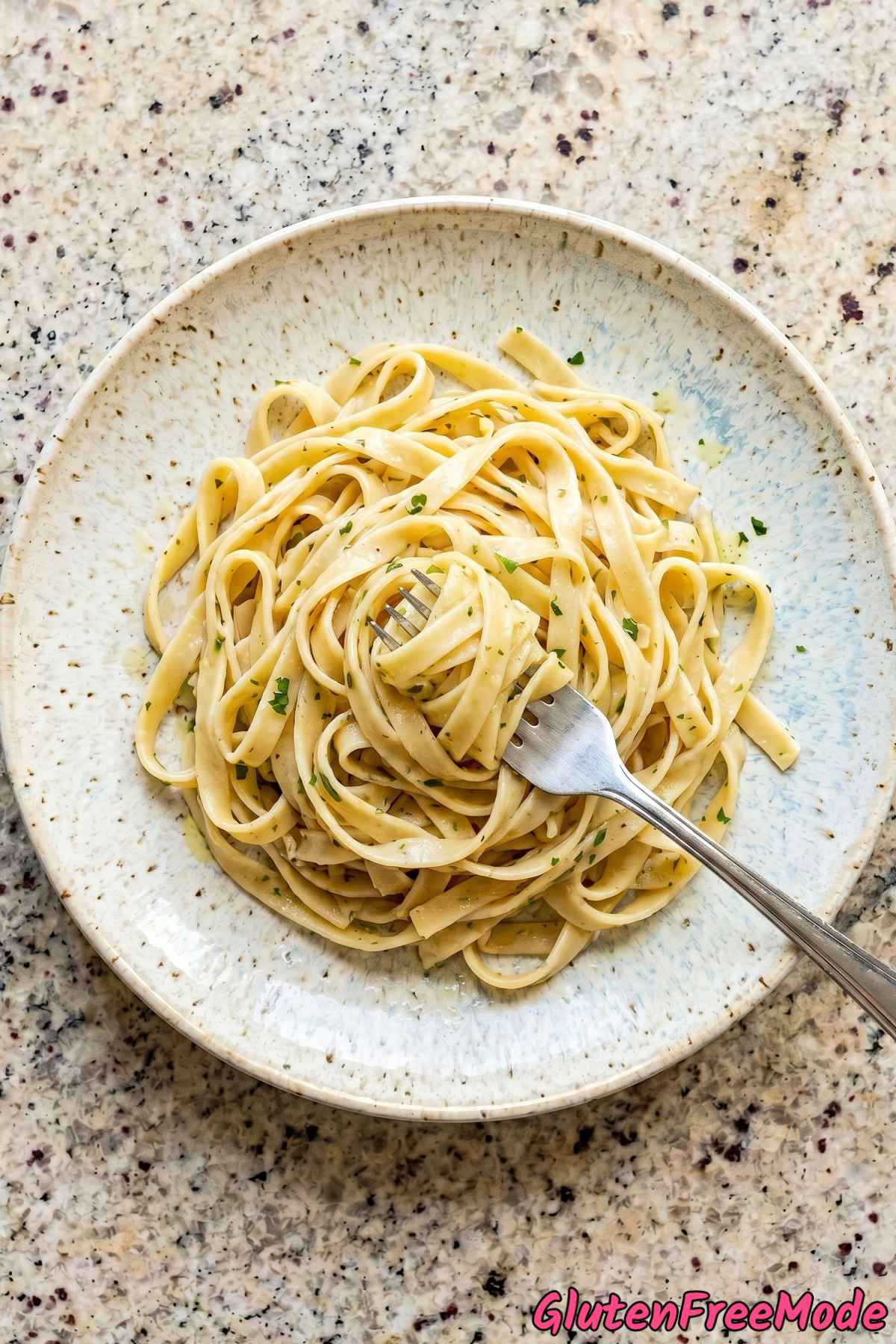
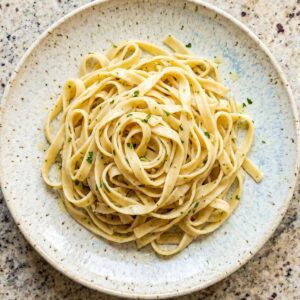
This gluten free homemade fresh pasta has a great texture and tastes just like the real thing. It’s soft, it’s tender, and it has that slight chew you want from fresh pasta.
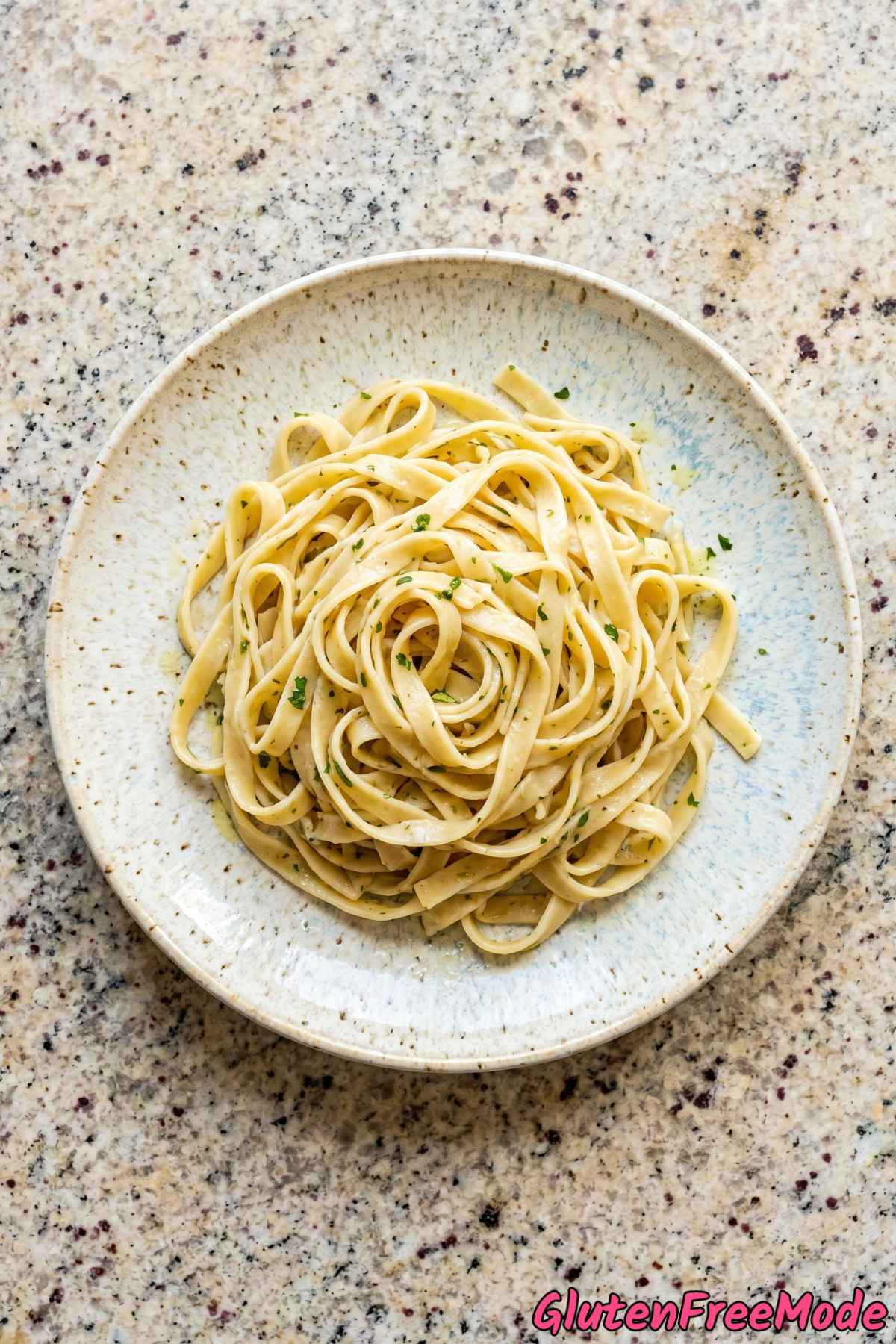
The dough comes together quickly with a few simple gluten free flours and starches. No weird or hard to find ingredients needed.
Once you try homemade, it’s hard to go back to the boxed stuff. You can cut it into fettuccine, pappardelle, or even lasagna sheets.
It cooks in just 2 to 3 minutes and pairs perfectly with whatever sauce you’re in the mood for. Let me show you how to make it.
Why You’ll Love This Recipe
Tastes Like Real Pasta – The blend of rice flour and tapioca starch gives this pasta a tender chew that rivals traditional wheat pasta.
Only a Few Simple Ingredients – You need just seven pantry-friendly ingredients to make fresh pasta from scratch at home.
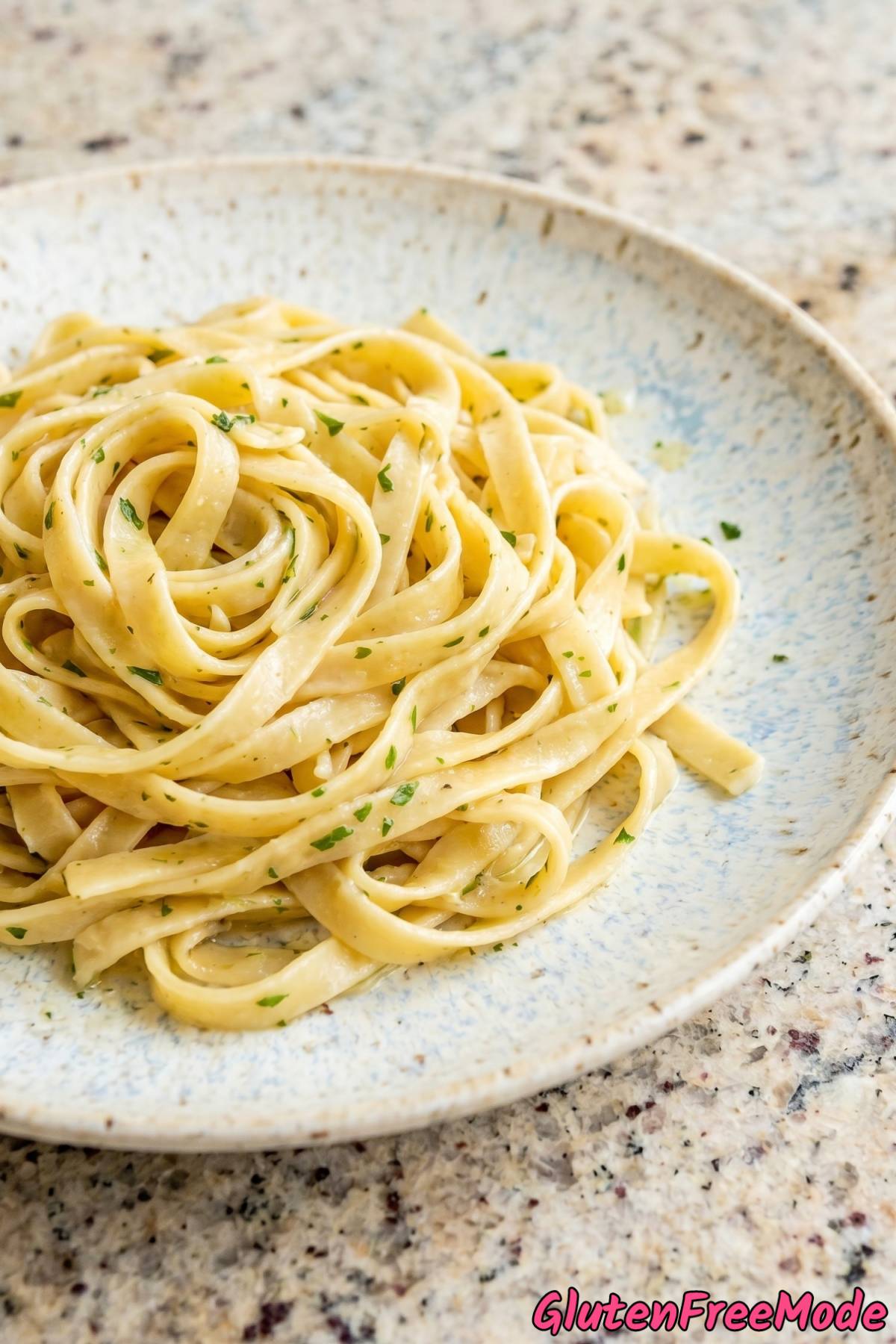
No Gummy Texture – The potato starch and xanthan gum work together to prevent that mushy or gummy feel common in gluten free pastas.
Way Better Than Store-Bought Gluten Free Pasta – Boxed gluten free pasta often falls apart or tastes starchy but this homemade version holds its shape beautifully.
Ingredients
- 1 1/4 cups Fine White Rice Flour
- 1/2 cup Tapioca Starch
- 1/4 cup Potato Starch
- 1 tsp Xanthan Gum
- 1/2 tsp Salt
- 3 Large Eggs
- 1 tbsp Olive Oil
- 1 to 2 tbsp Water, as needed
How to Make
Step 1
In a large bowl, whisk together the rice flour, tapioca starch, potato starch, xanthan gum, and salt until evenly combined. Make a well in the center.
Step 2
Add the eggs and olive oil into the well. Use a fork to gradually pull the flour mixture into the eggs, stirring in a circular motion until a shaggy dough begins to form. If the dough is too dry and crumbly, add water one tablespoon at a time until it comes together.
Step 3
Turn the dough out onto a surface lightly dusted with rice flour and knead for 3 to 4 minutes until smooth, pliable, and no longer sticky. Shape into a ball, wrap tightly in plastic wrap, and let it rest at room temperature for 20 minutes.
Step 4
Divide the dough into 4 equal pieces. Working with one piece at a time and keeping the rest covered, flatten it slightly and feed it through a pasta machine starting at the widest setting. Fold the dough in half and pass it through again. Continue narrowing the setting one notch at a time until you reach your desired thickness, usually setting 5 or 6 for fettuccine.
Step 5
Once the sheets are rolled, dust them generously with rice flour and cut into your desired shape, whether that is fettuccine, pappardelle, or lasagna sheets. Toss the cut pasta gently with a little extra rice flour to prevent sticking.
Step 6
Bring a large pot of generously salted water to a rolling boil. Cook the fresh pasta for 2 to 3 minutes, until it floats and is tender but still has a slight chew. Drain and toss with your favorite sauce immediately.
My Tips
Get the Dough Moisture Right
Gluten free pasta dough is tricky because the flours absorb moisture differently depending on the brand and even the humidity in your kitchen. Start without any added water and only add it if the dough is genuinely dry and crumbly after you mix in the eggs.
You want a dough that feels slightly tacky but not wet or sticky. If it sticks to your hands a lot, you’ve gone too far and need to knead in a little more rice flour.
It’s way easier to add a tiny splash of water than to fix a dough that’s too wet, so go slow with it.
Don’t Skip the Rest
That 20-minute rest isn’t optional. The xanthan gum needs time to hydrate and bind everything together, and the starches need time to absorb the moisture evenly.
If you try to roll the dough right away, it will crack at the edges and tear apart as it goes through the pasta machine. After resting, it becomes way more flexible and cooperative.
Keep it wrapped tight in plastic wrap the whole time so it doesn’t dry out on the surface.
Use Rice Flour for Dusting
Always dust your work surface, pasta sheets, and cut noodles with fine white rice flour – never regular starch or other flours. Tapioca and potato starch get gummy when they absorb moisture, which will make your pasta sticky and clumpy.
Be generous with it too. Gluten free pasta is stickier than regular pasta, especially right after rolling. Dust both sides of each sheet before cutting and toss the cut noodles with more rice flour right away.
More Tasty Recipes
FAQ
Can I make this pasta without a pasta machine?
Yes, you can roll the dough out by hand using a rolling pin on a surface dusted with rice flour. It takes more effort and patience, but you can absolutely get it thin enough for great pasta.
Try to roll it as evenly as possible to about 1/16 of an inch thick. It won’t be as perfectly uniform as a machine, but it will still taste delicious.
Gluten Free Homemade Fresh Pasta
Equipment
- pasta machine
Ingredients
- 1 1/4 cups Fine White Rice Flour
- 1/2 cup Tapioca Starch
- 1/4 cup Potato Starch
- 1 tsp Xanthan Gum
- 1/2 tsp Salt
- 3 Large Eggs
- 1 tbsp Olive Oil
- 1 to 2 tbsp Water, as needed
Instructions
- In a large bowl, whisk together the rice flour, tapioca starch, potato starch, xanthan gum, and salt until evenly combined. Make a well in the center.
- Add the eggs and olive oil into the well. Use a fork to gradually pull the flour mixture into the eggs, stirring in a circular motion until a shaggy dough begins to form. If the dough is too dry and crumbly, add water one tablespoon at a time until it comes together.
- Turn the dough out onto a surface lightly dusted with rice flour and knead for 3 to 4 minutes until smooth, pliable, and no longer sticky. Shape into a ball, wrap tightly in plastic wrap, and let it rest at room temperature for 20 minutes.
- Divide the dough into 4 equal pieces. Working with one piece at a time and keeping the rest covered, flatten it slightly and feed it through a pasta machine starting at the widest setting. Fold the dough in half and pass it through again. Continue narrowing the setting one notch at a time until you reach your desired thickness, usually setting 5 or 6 for fettuccine.
- Once the sheets are rolled, dust them generously with rice flour and cut into your desired shape, whether that is fettuccine, pappardelle, or lasagna sheets. Toss the cut pasta gently with a little extra rice flour to prevent sticking.
- Bring a large pot of generously salted water to a rolling boil. Cook the fresh pasta for 2 to 3 minutes, until it floats and is tender but still has a slight chew. Drain and toss with your favorite sauce immediately.